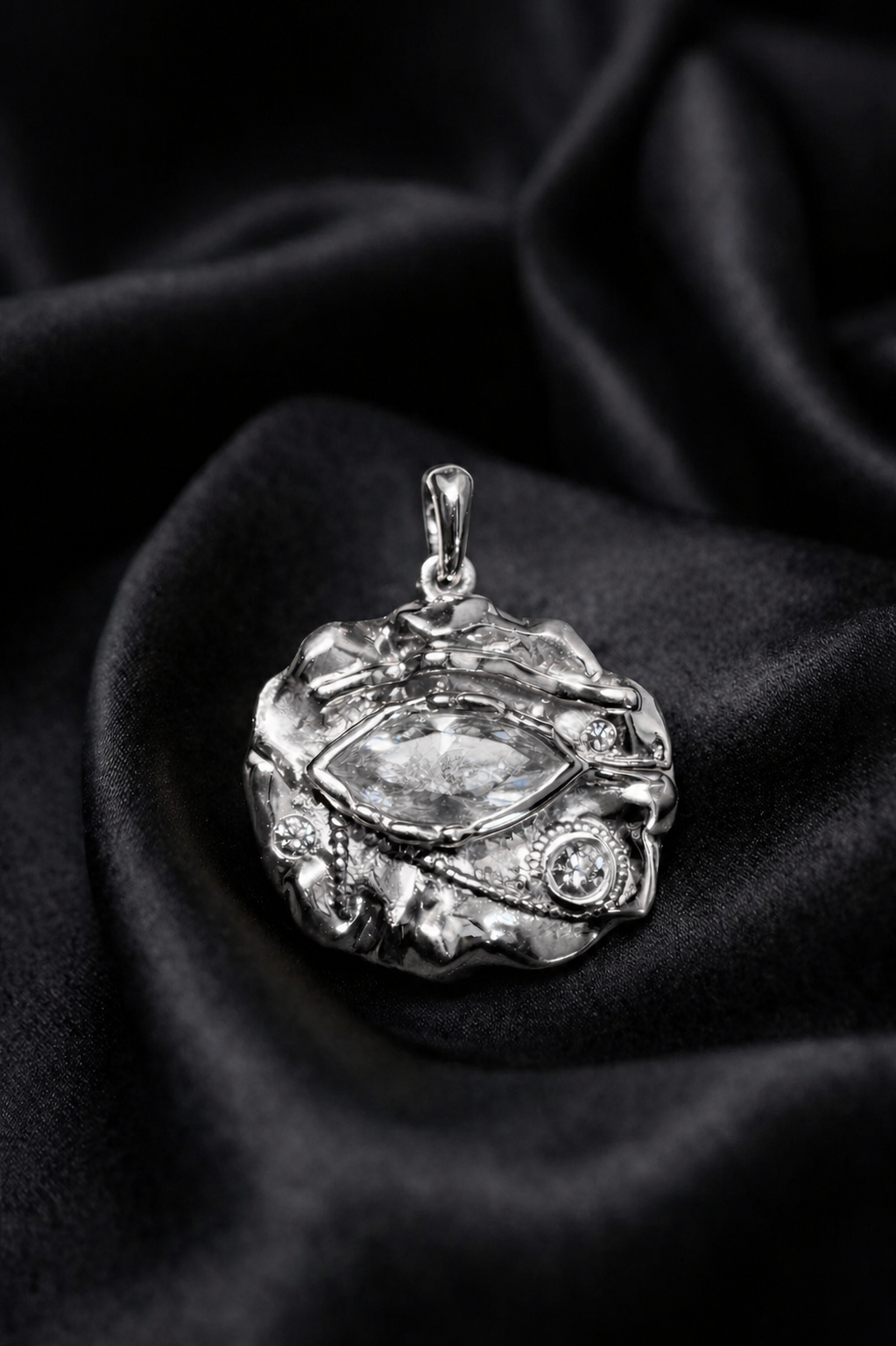
Marquise of Horus Pendant
Marquise of Horus Pendant
Couldn't load pickup availability
The House Standard
Certified IGI and GIA Diamonds
Ethically sourced stones, papers travel with every piece
CAD Refined in Italy
Digital master files by an architect trained in the Cartier tradition
Made to Order in Denver
Cast by hand in the lost wax method, nothing held in inventory
Lifetime Resizing Support
No time limit, coordinated at no profit to the house
The Ancient History
A sculptural interpretation of the Eye of Horus, one of the most enduring protective symbols of the ancient world.
In Egyptian myth, Horus lost his left eye in battle with Set while avenging his father Osiris. The eye was torn into six parts and restored by Thoth, and the restored form was called the wedjat, the whole one. The Eye of Horus amulet was worn against harm, misfortune, and the evil eye, one of the most common forms in ancient Egyptian jewelry, and its six parts were used as fractions in Egyptian arithmetic.
The falcon god's two eyes were read as the sky's two lights, the left as the moon and the right as the sun, tied to Ra. The two were often drawn as a single form, which is why the same symbol is known as both the Eye of Horus and the Eye of Ra.
This pendant sets a marquise stone into a sculpted gold field, the eye read as a single cut stone rather than drawn. A talisman in the oldest sense, made to be worn daily.
Jewelry Details
- Material: Solid 18k gold, yellow or white
- Dimensions: 15mm tall, 12mm wide (excluding bail)
- Weight: 4.46 grams solid 18k gold (excluding stones)
- Stones: 0.56ct marquise lab diamond, D color, VVS2 clarity. Three round lab diamonds at 1.2mm, 1.5mm, and 2mm.
- Bail: fits chains up to 3mm
- Custom engraving available on the back of the pendant, $45
Each pendant is built around a hand-selected marquise stone. A comparable diamond is sourced for every order, so final pricing may shift slightly with the stone. Natural diamonds and other round stone options available on request.
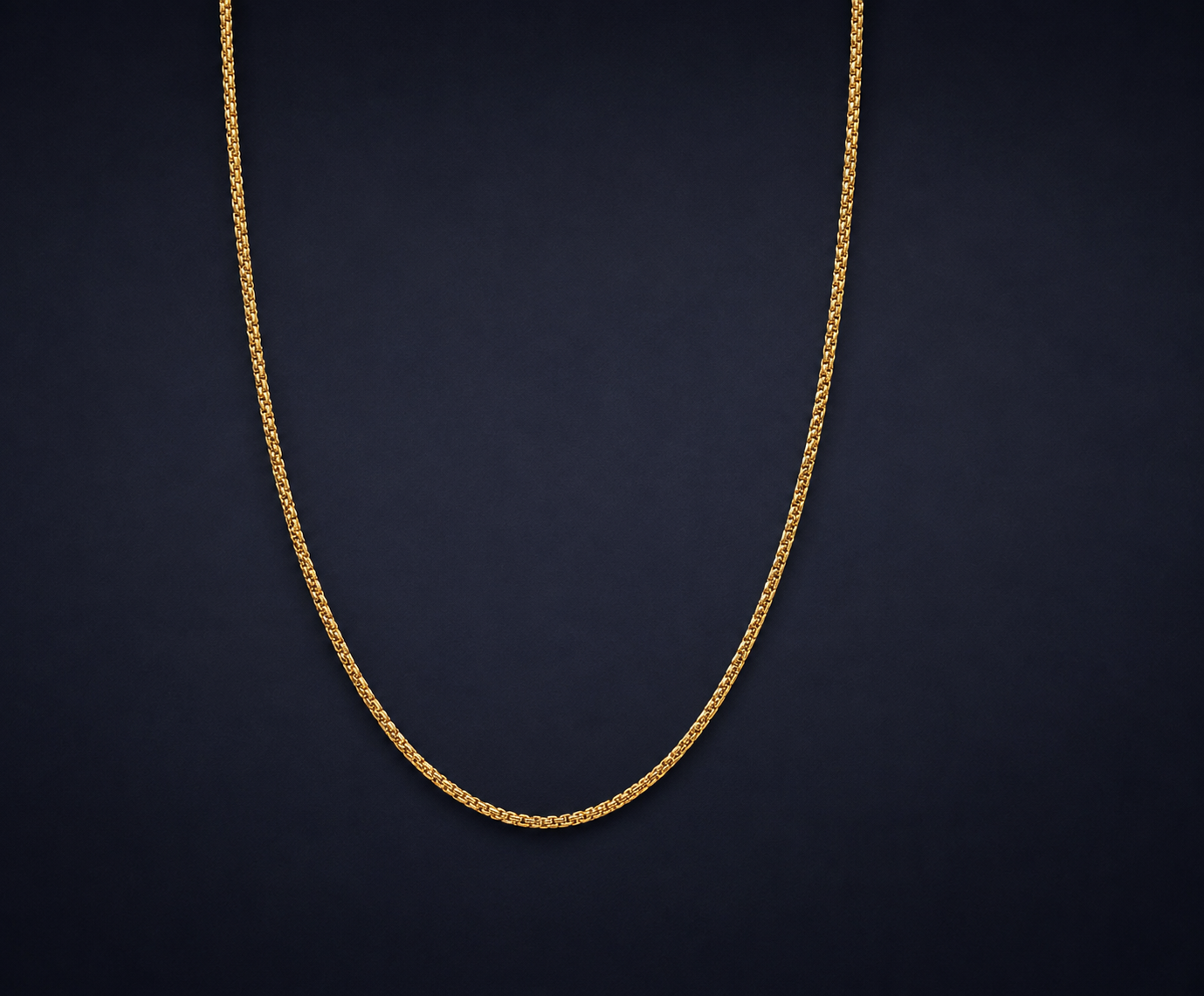
Made to order. Pieces require four to six weeks to produce before shipping. Worn as a necklace on the chain of your choosing; chain sold separately.

Top image: Temple of Kom Ombo in Aswan, Egypt.
Middle image: Faience Udjat eye (Eye of Horus) amulet found in Cyprus, Egypt, 1st century CE. The Metropolitan Museum of Art (Blue Image).